TX·Reset
← TX ResetSmoke & Odor Remediation
IICRC FSRT & OCT certified

We don't mask
odors. We dismantle
their chemistry.

Most “deodorizing” services spray a fragrance counter-actant, run an ozone machine for a few hours, and call it done. That treats the symptom. We treat the source — the ultrafine particulate, the semi-volatile organic compounds adsorbed into your drywall, the third-hand smoke chemistry that re-emits at room temperature for months. This page is the long version of how we do it, and why we're built differently.

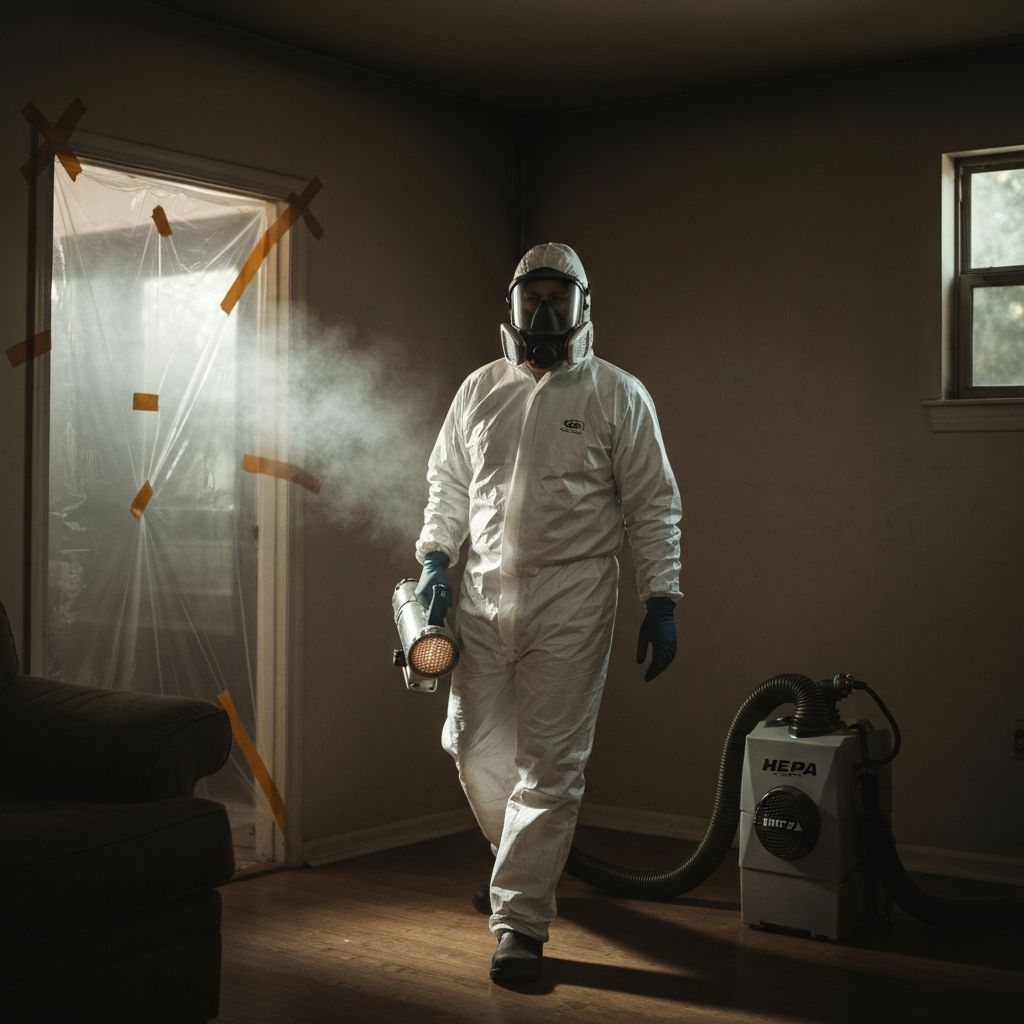
A technician in PPE operating a thermal fogger inside a containment-sealed room

On-site / King William, SA · Stage 5: thermal fogging under negative pressure

(01) Why “cleaning” fails

The smell isn't the smoke.
The smell is what the smoke left behind.

  • Combustion produces three things, not one.

    Every fire — a kitchen flare-up, a cigarette, a candle, a cannabis joint — produces (1) ultrafine particulate (PM0.3–PM2.5), (2) volatile organic compounds (VOCs) like benzene, formaldehyde, acrolein, and (3) semi-volatile organic compounds (SVOCs) including nicotine, polycyclic aromatic hydrocarbons (PAHs), and cannabinoid oxidation products. Surface cleaning addresses only the first.

  • Smoke moves like a gas, then condenses like a liquid.

    Hot combustion plumes carry SVOCs in vapor phase. As they cool, they re-condense onto every cold surface in the property — including the back of drawers, inside HVAC plenums, behind crown molding, and on the cold side of window glass. This is why a room can smell fine on Monday and bad again on Wednesday: temperature and humidity drive re-emission.

  • Drywall is a sponge. Carpet pad is a deeper sponge.

    Standard 1/2" drywall has paper facing with a porosity of roughly 60% and is hygroscopic. SVOCs and nicotine adsorb into the gypsum core, then desorb (off-gas) for 6–24 months under normal conditions. Carpet padding, attic batt insulation, particleboard, and HVAC fiberglass duct liner behave the same way. Wiping the surface does nothing for what is in the substrate.

(02) Chemistry

Four kinds of smoke.
Four different protocols.

The IICRC recognizes distinct smoke residue categories because they require chemically opposite treatments. Using the wrong one — for example, wet-cleaning dry char or ozoning a kitchen-grease residue — actively makes the property worse. Diagnosis comes before chemistry. Always.

Type AResidue category

Dry / flaming-combustion smoke

Typical sources
Paper, wood, natural fibers · house fires with good O₂ supply
What it leaves
Powdery, non-greasy carbon char. Off-gasses lightly.
Why it's hard
Migrates everywhere airflow goes. Easy to remove from surfaces, hard to remove from soft goods.
Our protocol
Dry chemical sponges (vulcanized rubber) first — never wet. Wet cleaning prematurely smears char and drives it deeper into porous substrates. Follow with HEPA vacuum (≥ 99.97% @ 0.3 µm), then surfactant pass.
Type BResidue category

Wet / smoldering combustion smoke

Typical sources
Synthetics, plastics, electrical fires, slow-burning upholstery
What it leaves
Sticky, smeary, acidic. pH commonly 3.5–5.0.
Why it's hard
Reactive with metals (corrodes brass, copper, electronics within 48 hours). Severe odor load. Requires alkaline counter-chemistry.
Our protocol
Time-critical. Within 24–72 hours: alkaline pre-treatment (pH 9–11) to neutralize acidic char, then anionic surfactant cleaning. Electronics get a separate corrosion-inhibitor protocol. Hydroxyl, not ozone, on plastics.
Type CResidue category

Protein residue (kitchen / oil fires)

Typical sources
Burned food, grease fires, scorched cookware, oven flare-ups
What it leaves
Nearly invisible amber-yellow film. Discolors paint, varnish, and aluminum. Extreme malodor at low concentrations (sub-ppm).
Why it's hard
Detection — clients often don't see it. ATP swab readings of 800+ RLU on surfaces that look clean. Penetrates everything: cabinet interiors, window seals, light bulbs.
Our protocol
Enzymatic protein digester (subtilisin / lipase blend) at controlled pH, 5–10 minute dwell, agitation, low-residue rinse. Repeat on a per-substrate basis. ATP swab verification before sealing.
Type DResidue category

Tobacco & cannabis (third-hand smoke)

Typical sources
Long-term indoor smoking · single-event party-smoking events
What it leaves
Nicotine + cotinine adsorbed to all surfaces. Cannabinoid oxidation products + terpenes embedded in fats / plastics. Continues forming TSNAs (tobacco-specific nitrosamines including NNK) for months in reaction with ambient HONO and ozone.
Why it's hard
The chemistry keeps evolving after the smoking stops. A property cleaned without sealing will register elevated nicotine and TSNAs on swabs 18+ months later. This is the category where most companies fail.
Our protocol
Multi-pass alkaline degreaser on all hard surfaces, hydroxyl atmospheric oxidation 24–72 hr, pigmented shellac primer on every porous substrate, HVAC remediation top-to-bottom, soft-goods either ozone-chambered off-site or replaced. We verify with surface nicotine swabs.

(03) The protocol

Eight stages.
Measured at every step.

This is the full protocol our crews work to. We publish it because most homeowners and hosts have never seen what real smoke remediation actually involves — and because when you compare quotes, you should be comparing apples to apples.

  1. Stage 01Hour 0

    Diagnostic baseline

    Before we touch anything, we measure. You can't verify a remediation if you didn't measure what you started with.

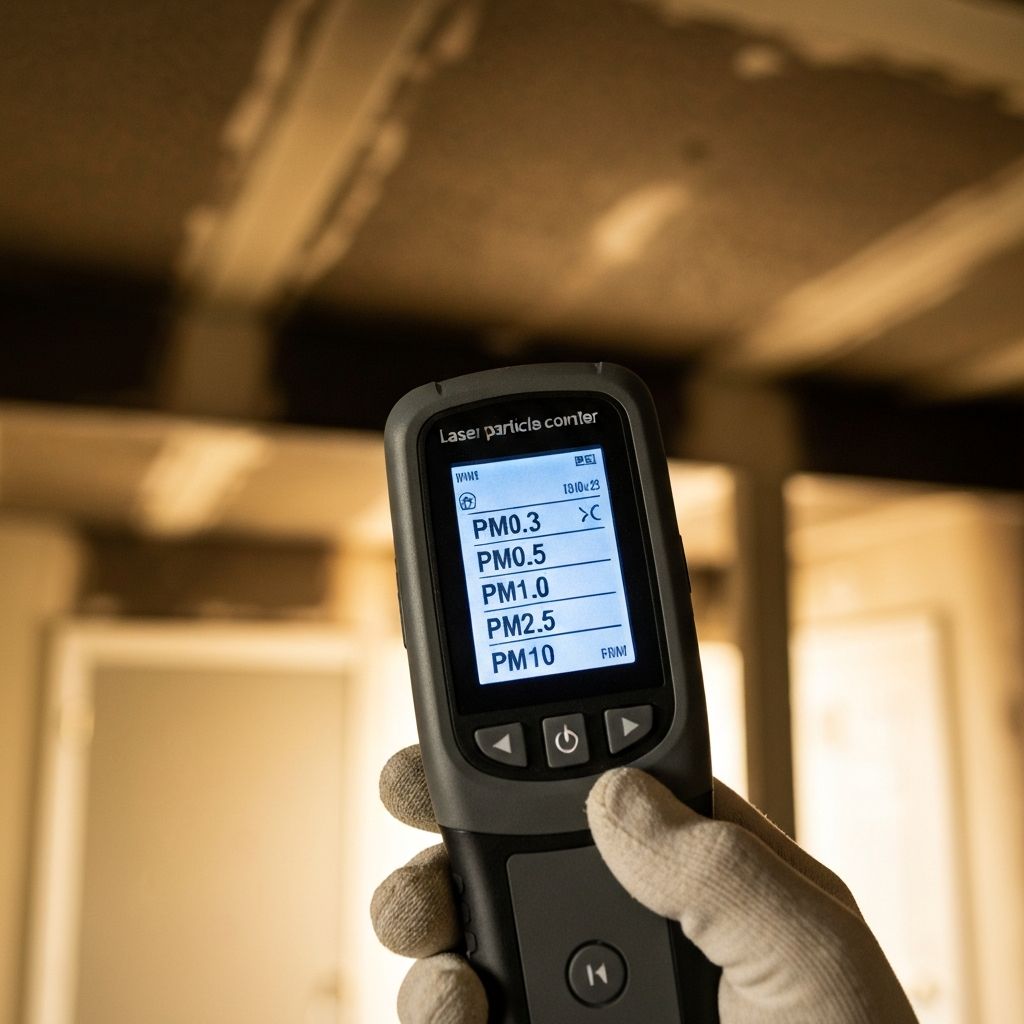
    • Laser particle counter readings at 0.3, 0.5, 1.0, 2.5, and 10 µm — captured per room at standing breathing height.
    • Photo-ionization detector (PID) sweep for total VOCs, calibrated to isobutylene. Hot-spot mapping in HVAC plenums and behind furniture.
    • ATP surface swabs in the affected zones — typically 6–12 swabs per 1,000 sq ft, indexed against an unaffected baseline area.
    • Surface pH testing in fire scenarios, to determine acidic-smoke severity and select alkalinity of pre-treatment.
    • If tobacco history: nicotine surface swabs (NicoCheck) on at least four porous and four non-porous surfaces.
    • Photographic & substrate inventory — every porous material that may need to be sealed, replaced, or treated separately is logged.
    OutputWritten diagnostic memo with target end-state thresholds. This is the contract.
  2. Stage 02Hour 1–3

    Source removal & containment

    We isolate the work area before we agitate anything. Disturbing residue without containment redistributes it through the rest of the property.

    • Char and burned material physically removed and bagged — soft goods triaged for off-site cleaning vs. disposal under photo log.
    • 6-mil polyethylene containment with zipper doors at every threshold leaving the affected zone.
    • HEPA negative-air machine (AFD) installed at minimum 4 air-changes-per-hour for the cubic volume, with flex duct exhausting outdoors. Manometer reading verified at −5 Pa.
    • Supply and return registers in the affected zone are sealed with ASTM E84 Class A poly. HVAC system is locked out at the breaker.
    • Floor protection rolled in. Personnel enter only in P100 full-face respirators and Tyvek.
    OutputA sealed, depressurized work envelope. Air leaving the property is HEPA-filtered. Air entering is controlled.
  3. Stage 03Day 1

    Dry mechanical removal

    Counter-intuitive but critical: most residue is removed dry, before any liquid touches it. Wet-first is the most common amateur mistake.

    • Vulcanized rubber chemical sponges, single-pass, top-down. Sponges are rotated to a clean face every 8–10 strokes and discarded — not laundered.
    • HEPA vacuum (Nilfisk GD930 or equivalent, 99.995% @ 0.3 µm filtration) over every horizontal and vertical surface. Brush-roll heads are not used on char — they re-aerosolize particulate.
    • Soft goods either bagged for off-site ozone-chamber treatment or, if heat-set synthetics or sentimental items, transferred to a hydroxyl chamber.
    • Light fixtures, HVAC grilles, ceiling fans, switch plates removed and bagged for separate cleaning.
    Output85–92% of total particulate load removed before any chemistry is introduced. Verified by repeat particle count.
  4. Stage 04Day 1–2

    Wet chemistry pass

    Now — and only now — we introduce liquid. The chemistry is matched to the residue category we identified at Stage 1.

    • Type A residues: low-pH (5.5–6.5) anionic surfactant, dwell 2–3 min, low-pressure rinse.
    • Type B residues: alkaline pre-treatment (pH 9.5–11) to neutralize acid char first, then anionic surfactant.
    • Type C (protein): subtilisin/lipase enzyme blend at 95–105 °F, 5–10 min dwell, mechanical agitation, low-residue rinse, repeat-and-verify by ATP.
    • Type D (tobacco/cannabis): multi-pass alkaline degreaser with a counter-ionic odor neutralizer (we do not use masking fragrances). Verified by surface nicotine swab.
    • Hard floors are mopped with two-bucket method and pH-neutralized after surfactant.
    OutputSurfaces measurably clean by ATP and surface-residue swab — but VOCs and SVOCs are still inside the substrates.
  5. Stage 05Day 2–4

    Atmospheric oxidation

    This is where we attack the gas-phase odor — the molecules embedded in drywall, framing, and soft goods that surface cleaning cannot reach.

    • Hydroxyl generation as the default — UV photolysis of ambient H₂O and O₃ produces hydroxyl radicals (OH•, oxidation potential +2.80 V), which break down odorants in occupied conditions without damaging materials.
    • Ozone (O₃, +2.07 V) used only on isolated soft-goods in an off-site sealed chamber, never on plastics, electronics, or finished elastomers. Ozone in-place is the wrong tool for nine out of ten residential jobs.
    • Chlorine dioxide (ClO₂) reserved for protein and biologic-overlap scenarios, with full evacuation and re-occupancy testing.
    • Run time and air-volume calibrated to room volume × Henry's Law partition coefficient of the dominant odorant — not a guessed-at number of hours.
    • Continuous PID monitoring inside the envelope. We don't stop on a schedule; we stop on a measured threshold.
    OutputGas-phase concentrations driven below detection in air. Substrates begin desorbing back toward ambient.
  6. Stage 06Day 3–5

    Substrate sealing

    For Type C and Type D jobs, oxidation alone does not stop long-term re-emission from porous substrates. The substrate has to be encapsulated.

    • All raw or absorbent surfaces — drywall, raw framing inside cabinets, particleboard backs, attic decking — receive two coats of pigmented shellac-based primer (Zinsser B-I-N type, denatured-alcohol carrier).
    • Shellac is non-negotiable here. Latex primers are vapor-permeable; oil-based stain blockers seal water but pass solvents. Only shellac reliably blocks the SVOC migration pathway.
    • HVAC duct interior surfaces inside reach are wiped, then receive a flexible duct-grade encapsulant (NIKRO or Foster 40-20).
    • Where sealing is impractical — fiberglass batt insulation in affected wall cavities, smoke-saturated carpet pad, contaminated HVAC fiberglass duct liner — the material is removed and replaced. We tell you which is which, in writing, before we start.
    OutputRe-emission pathway closed. Long-term odor return prevented.
  7. Stage 07Day 4–6

    HVAC remediation

    If the system ran during the smoke event — and it almost always did — every duct run, the evaporator coil, the blower wheel, and the plenum are contaminated. Skipping this step is the #1 reason a remediated property re-stinks within a week.

    • Evaporator coil chemically cleaned with a foaming alkaline coil cleaner, condensate drain pan flushed, blower wheel pulled and pressure-washed.
    • Rigid metal ductwork brushed with a rotating whip and HEPA-collected.
    • Fiberglass-lined ducts: visually inspected — replaced if saturated, encapsulated if salvageable.
    • Filter upgraded to MERV-13 minimum for the first 90 days post-job.
    • Refrigerant line set, supply boots, and return air drop are wiped, dried, and sealed where applicable.
    OutputThe system is no longer the property's odor reservoir.
  8. Stage 08Final day

    Verification & sign-off

    We measure again. The numbers either hit the targets we agreed to in Stage 1, or we keep working — at our cost.

    • Repeat particle count at the same locations as Stage 1, in same units, same height.
    • Repeat PID VOC sweep. Target: ≤ 110% of unaffected reference area.
    • Repeat ATP swabs. Target: indexed within reference area variance.
    • For tobacco/cannabis: repeat surface nicotine swabs. Target: at or below unaffected reference.
    • For insurance jobs: third-party industrial hygienist clearance available on request.
    • Photographic close-out report delivered as a PDF, with all readings, before/after photos, materials sealed, and warranty terms.
    OutputA property that doesn't just smell clean — that measures clean. Backed by a written 12-month odor-return warranty.

(04) Instrumentation

Tools that measure,
not just ones that spray.

The line between cleaning and remediation is the line between “looks fine” and “measures fine.” We carry instrumentation on every job not because it's required, but because without it, we couldn't honor a warranty.

Handheld laser particle counter showing PM readings
  • Laser particle counter

    0.3 / 0.5 / 1.0 / 2.5 / 10 µm channels · NIST-traceable

    Diagnostic baseline + verification at sign-off. PM0.3 is the lower limit of HEPA performance and the smallest fraction we can reliably resolve.

  • Photo-ionization detector (PID)

    10.6 eV lamp · isobutylene-calibrated · 1 ppb resolution

    Total VOC sweep — formaldehyde, benzene, toluene, acrolein, nicotine, terpenes. Tells us when atmospheric oxidation has actually finished.

  • ATP luminometer

    RLU readings, 15-second cycle · per-surface swabs

    Quantifies organic-residue load — invaluable for protein (Type C) jobs where the residue is invisible to the eye.

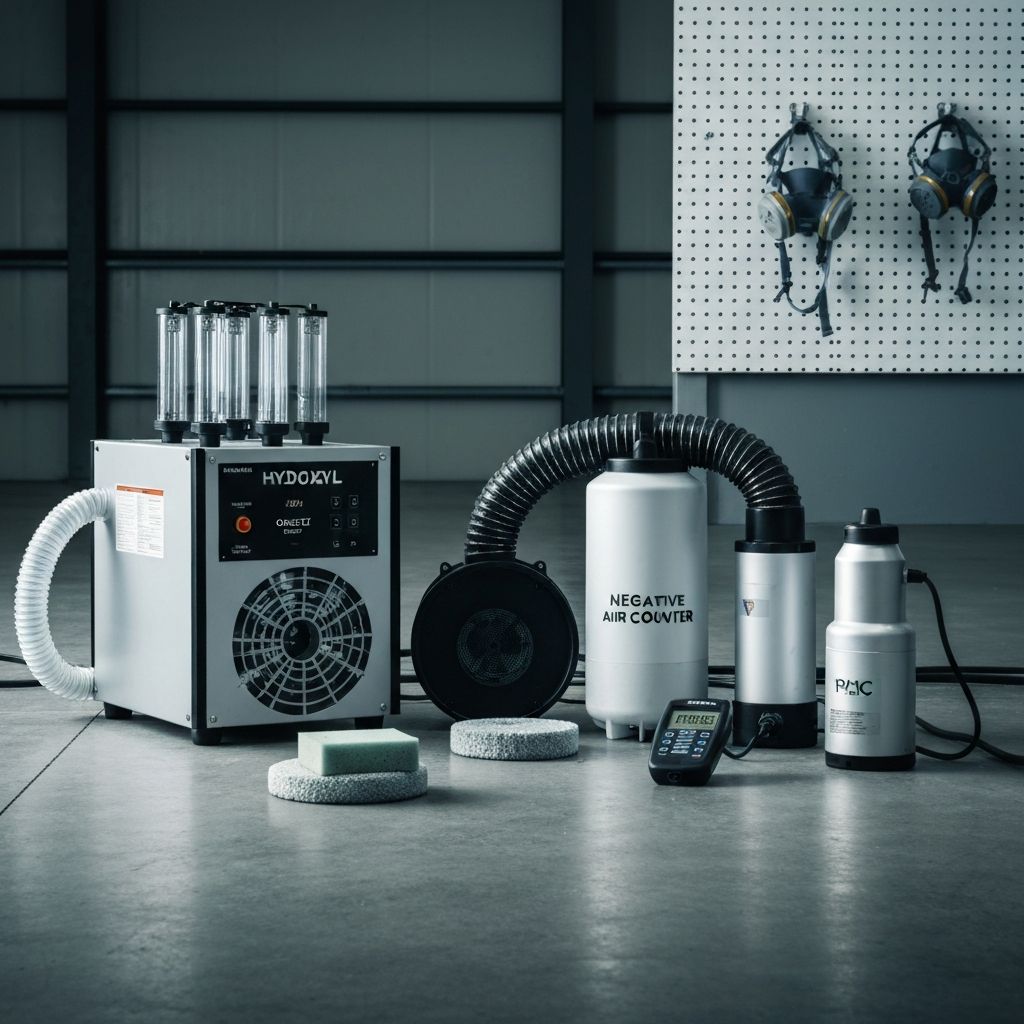
  • Hydroxyl generator (Odorox / Sanijet)

    UV-C photocatalysis · 8 quartz lamps · 1500 ft³ rated

    Primary atmospheric oxidation tool. OH• radical is more aggressive than ozone (+2.80 V vs +2.07 V) and safe to run in occupied space.

  • Ozone generator (sealed chamber only)

    10 g/hr corona discharge · O₃ destructor on exhaust

    Off-site soft-goods chamber for textiles, drapes, plush items. Never deployed in occupied rooms or on plastics.

  • Thermal fogger

    Pulse-jet · 5–50 µm aerosol · solvent-based deodorizer

    Stage 5 follow-up. Mimics smoke's penetration paths to deliver a counter-active deodorizer into the same crevices smoke reached.

  • ULV cold fogger

    Variable nozzle · 20–150 µm · water-based actives

    For broader surface coverage of antimicrobial or pH-buffered deodorizers without heat.

  • HEPA negative-air machine

    2,000 CFM · 99.995% @ 0.3 µm · variable-speed fan

    Maintains negative pressure inside containment. Verified with a digital manometer at −5 Pa minimum.

  • Surface nicotine swab kits

    NicoCheck colorimetric · semi-quantitative

    Tobacco/cannabis (Type D) verification. We swab eight standardized surfaces before and after.

(05) The difference

How we're built different
from the cleaning company you almost called.

Most smoke jobs in San Antonio go to general cleaners or to franchise restoration shops working from a one-page playbook. Here's where the gaps are — and where we put a process.

Topic

Pre-work measurement

Visual + a sniff test.

Particle count, PID VOC sweep, ATP swabs, surface pH, photo log. Written diagnostic memo.

Topic

Containment

Closed door. Maybe a sheet of plastic taped to a frame.

6-mil poly with zipper doors, HEPA-AFD pulling negative pressure verified at −5 Pa, supply/return registers sealed.

Topic

Cleaning sequence

Wet-spray everything immediately, wipe with cotton towels.

Dry sponging first (vulcanized rubber), HEPA vacuum, then matched wet chemistry. Wet-first is how amateurs drive char into substrates.

Topic

Atmospheric oxidation

Drop in a $400 ozone generator overnight. Air it out. Done.

Hydroxyl as default for occupied/plastic-rich spaces (+2.80 V, no material damage). Ozone reserved for off-site soft-goods chambers. Run-time controlled by PID readings, not a timer.

Topic

Substrate sealing

Repaint with whatever's on the truck.

Two coats of pigmented shellac primer (Zinsser B-I-N) on every porous surface. Latex and oil primers do not block SVOC migration. Shellac does.

Topic

HVAC

Replace the filter.

Coil clean, blower-wheel pull, duct brushing with HEPA collection, fiberglass liner replaced if saturated, plenum encapsulated, MERV-13 for 90 days.

Topic

Fragrance

Heavy citrus or “ocean breeze” counter-actant. The smell people associate with a “fresh” place.

We use counter-ionic neutralizers (carbonyl scavengers, ester pairing chemistry). The end state smells like nothing. That's the goal.

Topic

Post-work verification

“Smell it yourself, see what you think.”

Repeat particle count, PID, ATP, and (for tobacco) nicotine swabs. PDF close-out report with every reading.

Topic

Warranty

“Call us if there's a problem.”

12-month written odor-return warranty. If the smell comes back from anything we treated, we re-do the affected stages free.

(06) Documented results

Three jobs.
Three sets of numbers.

Every smoke remediation we perform is documented with pre and post measurements. No hand-waving, no “trust us.” Three recent San Antonio short-term rentals, with the readings.

3-Bedroom STR · Southtown

3-Bedroom STR · Southtown

Heavy cigarette residue, 11 months of smoking guests

Initial nicotine swab (NicoCheck)
184 µg/100cm²
Post-remediation swab
< 2 µg/100cm² (NSC)
Airborne PM2.5 — start
412 µg/m³
Airborne PM2.5 — clearance
6 µg/m³
TVOC reduction
94.6%
Time on site
4 days

Field note · Encapsulation of attic decking with shellac; HVAC plenum re-lined; all paper-faced drywall in living room replaced; carpet pad removed and tackstrip discarded.

Casita · Alamo Heights

Casita · Alamo Heights

Kitchen grease fire — protein smoke, no visible char

Substrate pH (range)
8.9 – 9.4 (alkaline)
Cleaning agent
Acidic counter-balance, pH 4.2
Hydroxyl runtime
72 hrs continuous
Odor panel — start
7 / 10
Odor panel — clearance
0 / 10 (3-judge blind)
Owner re-listed in
5 days

Field note · Protein smoke is the most-missed event — invisible film, intensely malodorous when warm. Solved at the chemistry level, not by masking.

2-Story STR · Stone Oak

2-Story STR · Stone Oak

Cannabis & vape residue, 4 prior 'cleanings' failed

Cause of prior failures
Surface-only ozone, no source removal
Hidden source found
Return-air filter housing + attic batt
Materials removed
240 sq ft insulation, 14 ft duct liner
Sealer applied
Pigmented shellac, 2 coats, all framing
Re-test at 14 days
No detectable odor, owner-confirmed
Written guarantee honored
Yes — 12-month warranty

Field note · Cannabis terpenes (myrcene, β-caryophyllene) are lipophilic and repeatedly re-bloom from porous substrates as humidity rises. Ozone alone cannot solve this.

(07) Technical FAQ

Questions hosts actually ask us.

Ozone (O₃) oxidizes airborne and shallow-surface odorants, but it cannot meaningfully penetrate paper-faced drywall, attic insulation, carpet pad, or HVAC duct liner — which is exactly where SVOCs and tertiary nicotine residue live. Worse, ozone reacts with terpenes (from cannabis, citrus cleaners, even pine) to form formaldehyde and ultrafine secondary organic aerosols, which leaves you with a different — and worse — air-quality problem. Ozone has a place in the toolbox; it has never been a complete protocol.

Free on-site assessment · San Antonio & surrounding

If your guests
can smell it,
your reviews already know.

We'll come measure your property — particle counts, swab tests, HVAC inspection — and give you a written scope with real numbers. No high-pressure sales, no “ozone special.” Just a clear plan to make the smell genuinely, permanently, gone.

12-month written odor-return warranty · IICRC FSRT & OCT certified · $2M pollution liability